

Retailer Resources
Retailer Toolkit
The Retailer Toolkit brings together information and resources on some of the topics our members ask about most. Explore the sections below for helpful guidance, links and resources for operating a retail business in Alabama.
Please note: The information provided in this guide is intended as a general resource and is not a substitute for legal or professional advice. Requirements may change, and retailers should consult the appropriate agency or qualified professional regarding specific questions.

Business Licensing
Starting or expanding a retail business in Alabama requires the right licenses and registrations at the state, county, and local levels. The requirements can vary depending on your business structure, location and type of business.
All corporations, LLCs, and other formal business structures must register with the Alabama Secretary of State’s Business Entities Division.
Learn more about entity types, name reservation, certificate of formation, and fees through the Alabama Secretary of State’s Business Entities Division.
A privilege license is required for nearly all businesses operating in Alabama and must be obtained from the county Probate Judge or License Commissioner where the business is located.
Generally, a license is required in every county where the business is conducted.
Many cities require separate business licenses or registration. Contact the city office where you are conducting business to verify what licenses are required prior to transacting business.
Some businesses, such as pharmacies, pesticide sellers, alcohol and tobacco retailers, require additional state licensing or regulatory oversight.
The Alabama Department of Revenue provides a list of regulatory boards and agencies that require permits, certificates and licenses.

Sales Tax
Alabama retailers are generally required to collect and remit sales tax on taxable sales. Retailers may also be responsible for local sales taxes, which can vary depending on where a sale occurs.
Businesses making taxable sales in Alabama generally must obtain a sales tax license from the Alabama Department of Revenue (ADOR).
Retailers can register, manage tax accounts and file returns through the ADOR’s My Alabama Taxes portal. Before applying, review ADOR’s business registration requirements.
Alabama has a state sales tax as well as county and municipal sales taxes. Rates and applicable taxes can vary based on the location and type of sale.
Additional Resources:
ONE SPOT (Optional Network Election for Single Point Online Transactions) provides a single-point of filing for all state-administered local sales, use, rental, and lodgings taxes, as well as, non-state administered sales, use, rental, and lodgings taxes through My Alabama Taxes.
Shoplifting
Retail theft, often referred to as shoplifting, is prosecuted under Alabama’s general theft statutes. Retailers should understand the types of conduct that may constitute theft and the circumstances under which employees may detain a suspected shoplifter.
Under Alabama law, theft of property occurs when a person knowingly obtains or exerts control over the property of another with the intent to deprive the owner of the property. See Ala. Code § 13A-8-2.
Retail theft can include:
- Working with another person to commit the act
- Swapping price tags to pay less
- Concealing merchandise to avoid detection
- Returning stolen merchandise for store credit
- Transferring merchandise to another container to avoid detection
- Possessing retail merchandise outside of its original packaging
The degree of theft may depend on the value of the merchandise and other circumstances.
Third Degree: Class A misdemeanor. Merchandise valued at $500 or less.
Second Degree: Class C felony. Merchandise valued between $500.01 and $2,500, or certain items such as firearms and controlled substances.
First Degree: Class B felony. Merchandise valued at more than $2,500, or organized retail theft.
Organized retail theft occurs when two or more individuals work together to steal retail merchandise or when merchandise is obtained through coordinated schemes.
Retailers and their employees may detain suspected shoplifters when there is probable cause to believe the person has committed theft of the merchant’s goods, provided the detention is conducted in a reasonable manner and for a reasonable length of time. This privilege is outlined in Ala. Code § 15-10-14.
The reasonableness of a detention depends on the facts and circumstances of each case. Courts determine whether probable cause exists on a case-by-case basis.
Merchants should conduct reasonable investigations to confirm their suspicions before detaining a suspected shoplifter.

Worthless Checks
Accepting checks, whether paper or electronic drafts, comes with the risk that a payment may be dishonored. Alabama’s Worthless Check Act outlines steps retailers must follow to protect themselves and pursue repayment. Following the proper process not only strengthens your ability to recover funds but also provides legal protections.
At checkout capture ID details and witness the signature.
- Record the check writer’s name, residence address, phone number on the check (or use your store’s check cashing ID number tied to that info). An employee should witness the signature and initial the check. Ask for a valid government photo ID or acceptable non-photo alternatives.
Present the check promptly.
- Deposit or present the instrument in the ordinary course.
If dishonored or bounced, send the statutory Notice of Dishonor.
- Mail the notice by certified or registered mail, return receipt requested to the address on the check or address given at issuance. Use the stator wording and include the service charge (up to $30) with the total due. Keep copies of mailing receipts.
Give 10 days to cure.
- The writer has 10 days after receiving the notice to pay the face amount + service charge.
If paid, document and close.
- Retain records such as date, amount, and method of payment.
If not paid, escalate.
- Many District Attorneys maintain Worthless Check Units which can assist retailers by processing complaints, negotiating restitution, or proceeding with prosecution.
Find your District Attorney.
“This statutory notice is provided pursuant to Section 13A-9-13.2 of the Alabama Code. You are hereby notified that a check or instrument numbered _____________________, apparently issued by you on _____________________________.(date), drawn upon ____________________________(name of bank), and payable to ______________________, has been dishonored. Pursuant to the Alabama law, you have 10 days from receipt of this notice to tender payment of the full amount of such check or instrument plus a service charge of not more than $30.00, the total amount due being $_______. Unless this amount is paid in full within the specified time above, the holder of such check or instrument may assume that you delivered the instrument with intent to defraud and may turn over the dishonored instrument and all other available information relating to this incident to the proper authorities for criminal prosecution.”
NOTE: This notice must be sent via certified or registered mail, return receipt requested, to the check-writer’s address.
Employment Law
Retailers must comply with federal and state employment laws covering wages, working conditions, hiring, employee rights and workplace requirements.
Because employment laws can be complex and change frequently, retailers should consult qualified legal or human resources professionals when specific questions arise.
ARA members have access to additional resources via the Employment Law Resource Center.
Country of Origin Labeling
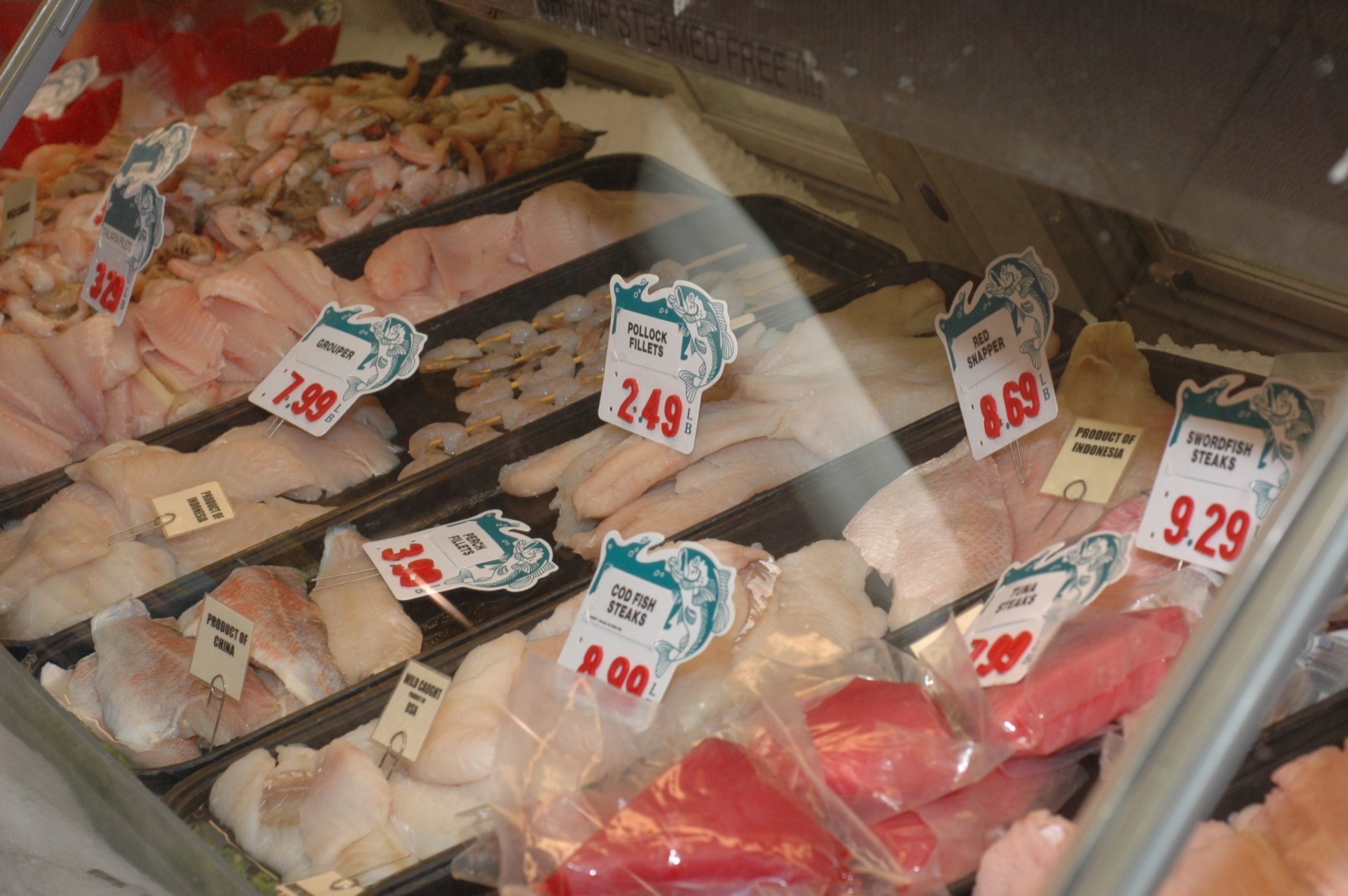
Alabama restaurants and grocery store delis that sell fish or shrimp must provide information about the country of origin and whether the seafood is farm-raised or wild. These requirements took effect Oct. 1, 2024, under Act No. 2024-339.
Alabama’s requirements apply to restaurants and grocery store delis that sell fish or shrimp. Suppliers are required to provide country of origin information to restaurants and grocery store delis.
Restaurants and grocery store delis must label fish and shrimp by country of origin or indicate that the product was imported.
For purposes of the law, the country of origin is the country where the animal from which the covered commodity is derived was slaughtered or substantially transformed.
For fish or shrimp from the United States, the label may use a state name, “USA,” “United States of America,” or a tradename or trademark containing one of those designations.
Fish and shrimp must also be identified as either farm-raised or wild.
Wild fish does not include net-pen aquaculture or other farm-raised fish or shellfish.
Restaurants and in-store delis that sell fish primarily for off-premises consumption must provide the country of origin or indicate that the product was imported in the same size and color font as the fish being sold. Alternatively, they may display an 8.5-by-11-inch sign on a conspicuous wall near where the fish and shrimp are sold. The sign must be at least 3 feet from the floor and use type that is at least 1 inch in size.
Restaurants that primarily serve customers for on-premises consumption and provide menus may include the country of origin or imported designation on the menu in the same location as the fish being sold and using the same size and color font. The notification may also be paper clipped to the menu.
If a restaurant does not use menus as a standard business practice, the notification may instead be displayed on an 8.5-by-11-inch sign at the main entrance that is visible to all patrons.
The notification requirements do not apply to a group of 10 or more people who preorder their food items, such as a banquet.
Sample signage and the law in two, 8.5 x 11 pages: Word | PDF
Provided by the Alabama Department of Public Health, Bureau of Environmental Services Food/Milk/Lodging
The Alabama law does not apply to retailers that are already required to provide country of origin information under federal law.
Grocery stores, supermarkets and club warehouses subject to the Perishable Agricultural Commodities Act must comply with federal country-of-origin labeling requirements.
Restaurants and in-store delis are exempt from the federal country-of-origin labeling requirements and are therefore subject to Alabama’s requirements.
Alcohol, Tobacco and Electronic Nicotine Licensing
Retailers that sell alcoholic beverages, tobacco, electronic nicotine delivery systems (ENDS) or other nicotine products must follow applicable state laws and regulations. The Alabama Alcoholic Beverage Control Board (ABC) provides licensing information, compliance resources and guidance for retailers.
All alcohol licensees are responsible for knowing and understanding Title 28 of the Code of Alabama and the Alabama ABC Rules and Regulations.
Retailers can find information about ABC license types, application requirements, downloadable pre-applications and checklists on the ABC website. Requirements vary depending on the type of business and the activities covered by the license.
The ABC Board provides resources specifically for retailers that sell tobacco products, electronic nicotine delivery systems (ENDS) and alternative nicotine products. This section also includes links to additional state and federal resources that may be helpful to retailers.
The ABC Board’s division offices can assist licensees with questions and provide information based on their location. Retailers can use the division map and phone list to find the appropriate ABC office.
Weights and Measures
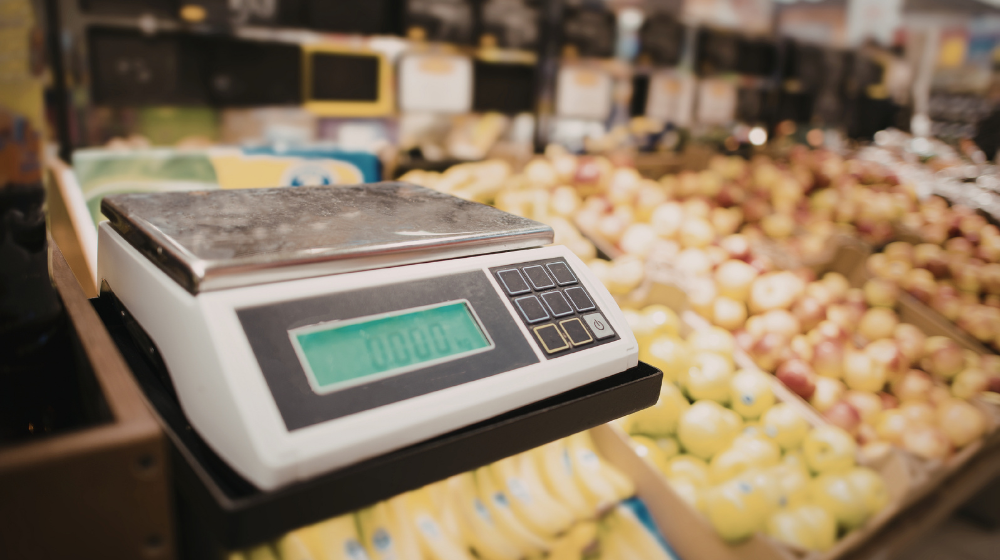
Retailers that sell products by weight, measure or count must comply with Alabama’s weights and measures requirements.
Commercial scales and other devices used to determine the quantity or price of products must meet applicable requirements and may be inspected by the Alabama Department of Agriculture and Industries.
Retailers can find information about weights and measures requirements through the Alabama Department of Agriculture and Industries Weights & Measures Division.
The Alabama Department of Agriculture and Industries may inspect commercial weighing and measuring devices and packaged commodities to verify accuracy and compliance.