


What We Do
Legislative Advocacy
Decisions made in Montgomery & Washington Impact Your Business.
Lawmakers shape tax rates, employment rules, payment regulations and licensing requirements that affect how businesses operate. The Alabama Retail Association monitors these issues and represents the interests of retailers in those conversations.
Each legislative session, our governmental affairs team monitors bills, evaluates their potential impact on Alabama retailers and engages directly with lawmakers to represent the interests of the retail industry.
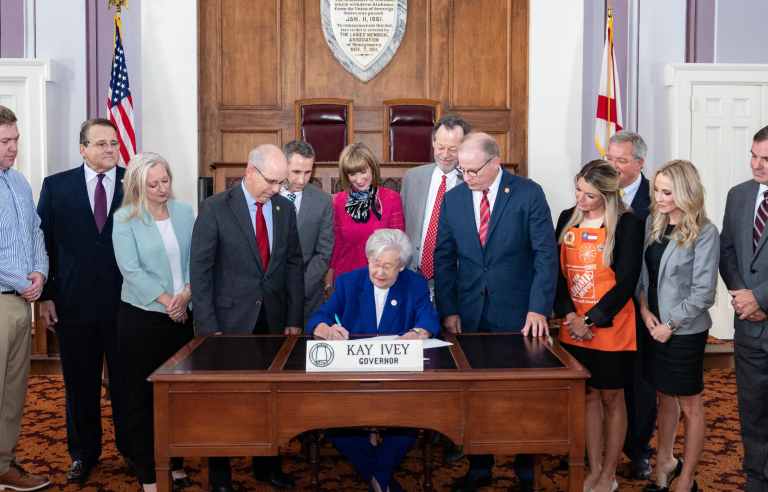
Stay Informed
& Get Involved
During the legislative session, ARA keeps members informed about the issues and legislation affecting Alabama businesses. Members receive legislative updates, access to resources for connecting with their lawmakers, and information about elections and the Alabama Retail PAC.

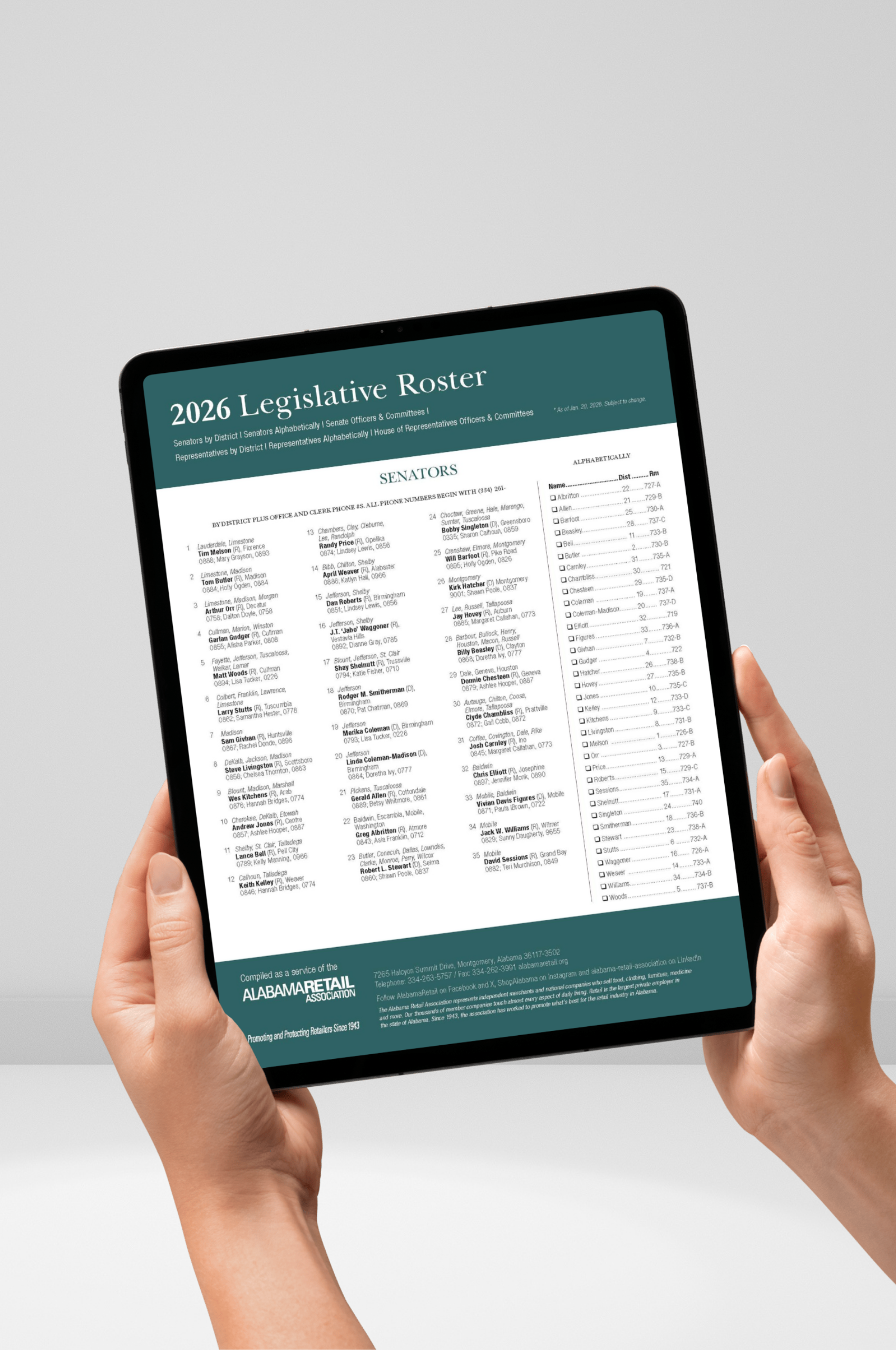
What We Track
The issues affecting retailers change from session to session. The Association monitors legislation and regulatory developments across a range of policy areas that can affect the cost and complexity of doing business in Alabama.
Tax Policy
Sales and use tax, ad valorem tax, tax exemptions and the distribution of online sales tax revenue can directly affect operating costs and consumers’ purchasing decisions.
Payments & Transaction Policy
From credit card transaction fees to cash acceptance requirements, rules governing how customers pay can have significant operational and financial implications for retailers.
Business Regulation
Licensing, local tax authority, franchise rules, and operational mandates can add cost and complexity to running a business.
Retail Crime & Loss Prevention
Legislation addressing retail theft, organized retail crime, arson and restitution can affect store safety, loss prevention and operating costs.
Data Privacy & Consumer Protection
Retailers increasingly face proposed requirements related to customer data, age verification, artificial intelligence, loyalty programs, disclosures and subscription practices.
Labor & Employment
Changes to wages, leave requirements, drug testing, hiring practices and other employment rules can affect how businesses recruit, manage and retain employees.
Food Policy
Labeling requirements, SNAP eligibility rules, and country-of-origin disclosures affect grocery and food retail operations from the store floor to the supply chain.
Alcohol, Tobacco & Hemp Policy
Age verification, licensing, product categories and point-of-sale requirements create unique compliance considerations for retailers selling regulated products.
Pharmacy & Healthcare Regulation
Retailers that operate pharmacies or sell regulated health products may be affected by changes in pharmacy, healthcare and product regulations.